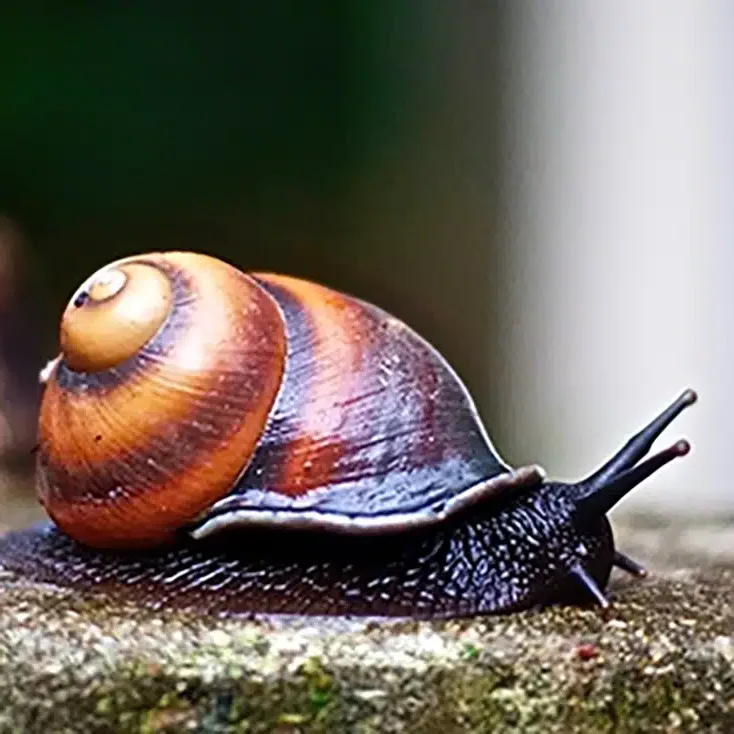
| Body Structure |
Soft, unsegmented body covered with a hard shell |
| Shell |
Spiral-shaped, made of calcium carbonate |
| Size |
Varies widely; common garden snails are typically 1-1.5 inches in diameter |
| Color |
Depends on species; can be brown, gray, white, or patterned |
| Foot |
Large, muscular, used for locomotion |
| Tentacles |
Two pairs; upper pair with eyes, lower pair for sensing environment |
| Eyes |
Located on the tips of the upper tentacles; capable of basic light detection |
| Mouth |
Located on the underside of the head; contains a radula (a toothed, chitinous ribbon) |
| Radula |
Used for scraping or cutting food before ingestion |
| Mantle |
A significant part of the body that secretes the shell |
| Respiratory System |
Pulmonary (air-breathing) or gill-based depending on the habitat |
| Reproductive System |
Hermaphroditic (possessing both male and female reproductive organs) |
| Lifespan |
Generally 2-5 years; some species can live up to 25 years in optimal conditions |
| Habitat |
Terrestrial, freshwater, and marine environments |
| Movement |
Slow, gliding motion using muscular contractions and mucus secretion |
| Diet |
Herbivorous, detritivorous, or omnivorous depending on species |